SaaS Customer Support: A Practical Guide for Lean Teams
What makes SaaS customer support different, the channels that matter, how to build the function from solo founder to team, the metrics to track, and how support drives retention and revenue.
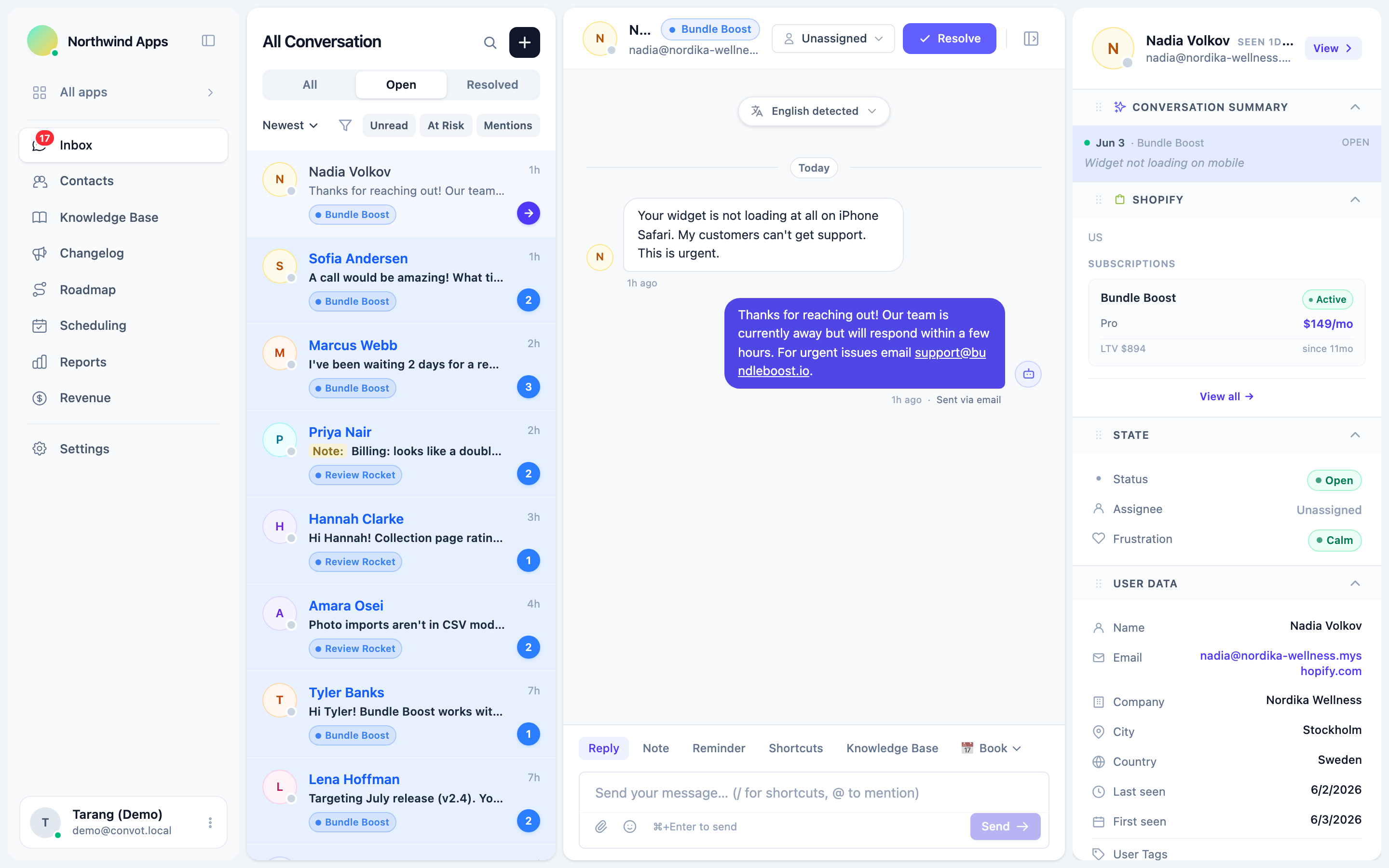
In a SaaS business, support is not a cost center you tolerate. It is the part of the company that touches your customers most often, and because your revenue recurs, every one of those touches either protects next month’s payment or quietly erodes it. Get support right and it becomes one of the cheapest growth levers you have. Get it wrong and it shows up later as churn you cannot explain.
This guide covers what makes SaaS customer support different, the channels worth running, how to build the function as you grow, the metrics that matter, and how to turn support into a retention engine instead of a queue you clear.
What makes SaaS support different
General customer service is about resolving a one-off issue. SaaS support is about keeping a relationship alive across months and years. Four things set it apart:
- It is retention-driven. A resolved ticket is not the goal; a renewed customer is. The same interaction that closes a ticket also decides whether they stay.
- It is technical and product-coupled. Your customers are using software, often in their own workflows, so answers require real product understanding, not a script.
- It is a product feedback loop. Support sees every rough edge first. That stream of friction is the best roadmap input you have, if you capture it.
- It is under constant scaling pressure. Recurring revenue means a growing base of customers who all keep needing help. Volume only goes up, so leverage matters more than headcount.
Treat support as a function that protects revenue and informs the product, and the rest of the decisions get easier.
The channels that matter, and which to run first
You do not need every channel. You need the few your customers actually use, run well.
- In-app / live chat. The highest-leverage channel for SaaS, because it catches the question at the moment of friction, inside the product. Start here. See how to add live chat for doing it well.
- Email / shared inbox. The workhorse for anything that is not urgent. A shared inbox keeps the whole team on the same thread and the customer’s full history in one place.
- Help center. Not a channel you staff, but the one that deflects the most volume. Covered in the ticket deflection playbook.
- Community / forum. Useful at scale, premature when you are small.
When you are tiny, run chat plus email plus a help center, and skip the rest until volume demands it.
Build the function in stages
Support that fits a five-person company breaks a fifty-person one, and vice versa. Build it for where you are.
Solo founder / pre-team. Do support yourself. Founder-led support is a feature, not a chore: you hear every problem unfiltered and your customers feel it. Use a single shared inbox and a chat widget, write a help-center article every time you answer the same question twice, and keep response times fast because at this stage you are the product’s reputation.
First support hire. The goal is to preserve quality while you step back. Write down the answers and the tone, set up macros and a real help center, and define what gets escalated to you. Pick the few metrics you will hold the line on (first response time, CSAT) before volume hides problems.
Growing team. Now you need process: routing, ownership, on-call for outages, and a feedback loop from support into product and roadmap. This is where tooling that connects support to revenue earns its keep, because you can no longer keep every account in your head.
The metrics that matter
You cannot improve what you do not measure, but a wall of charts changes nothing. Track a few that map to your bottleneck: first response time, resolution time, first contact resolution, CSAT, and deflection rate. The full breakdown, with benchmarks and how to calculate each, is in customer support metrics and KPIs. The one to start with is almost always median first response time.
Make support self-serve early
The single biggest mistake lean SaaS teams make is trying to answer their way through growth. You cannot. Build a self-serve layer, help center, status page, changelog, and a grounded AI agent, so the repeat questions never reach a human and your team is free to handle the ones that need judgment. Done early, it is the difference between a support load that scales with your team and one that scales with your customer base.
Support is a retention and revenue engine
Here is the reframe that changes how you staff and tool support: in SaaS, support quality and revenue are directly linked. A fast, low-effort resolution is a renewal you kept and sometimes an upsell you earned. A slow or unresolved issue is often the quiet first step toward a cancellation. The teams that win treat support as a retention lever, not a queue.
The practical move is to put each customer’s revenue context, plan, monthly value, and churn risk, beside the conversation, so you can see which issues are actually expensive and prioritize them. Then close the loop: when a customer leaves, learn whether support was the cause. That is the whole argument of how to reduce customer churn, and it is why support belongs near the revenue conversation, not buried in a separate department.
AI in SaaS support
AI is genuinely useful here, with one rule: keep it grounded. An agent that answers from your own help content and documented knowledge deflects routine questions accurately and keeps response times low as you grow. An agent that improvises invents wrong answers and erodes the trust support exists to build. Use AI for the routine and the after-hours, keep clear escalation to a human for anything sensitive, and feed it the same help center your customers search. What is an AI support agent? (And how to keep it from hallucinating) explains how grounding works and why it matters.
Tooling: what to look for
When you outgrow a plain inbox, look for a platform that covers chat, a shared inbox, and a help center in one place, shows you each customer’s revenue context, includes a grounded AI agent, and does not charge per agent in a way that punishes you for staffing support. Bundling those into one login and one bill beats stitching together five subscriptions, especially for a lean team. The best help desk software for small teams (2026) has an honest comparison of the main options. If you’re evaluating Zendesk specifically, Zendesk pricing explained (2026): what you’ll actually pay breaks down how its tier structure compares at small-team scale.
That is exactly what Convot is built for: live chat, a shared inbox, a help center, and a grounded AI agent, with live revenue intelligence beside every conversation, so a small team can run support that protects revenue without an enterprise budget.
The takeaway
SaaS customer support is a retention function wearing a support hat. Run the few channels your customers use, build the function for the stage you are at, track the handful of metrics that map to your bottleneck, deflect the routine with self-serve and grounded AI, and keep revenue context beside every conversation so you fix the expensive problems first. Do that, and support stops being the thing you survive and becomes one of the reasons customers stay.
Start free and run support that protects your revenue.
Revenue-aware support for Shopify app teams.
Live chat, help center, and every merchant's MRR, plan, and LTV beside the conversation. Free under $1k MRR.
Start free